
Why a coating fails, and what the slab is telling you
A coating peels for a reason. Most failed floors we see in Huntsville lifted because the first crew skipped the prep and rolled epoxy straight over a slick slab with no grind, so the coating never gripped and let go in sheets. Other floors trapped moisture, because humid Madison County summers push damp up through the concrete and a sealed top layer has nowhere to send that water, so it bubbles and lifts. Some floors just wore out under years of hot tires, dropped tools, and dragged bins. Hot rubber is the worst of it. On a warm day the tires grab a weak coating and peel it like tape. We read the slab before we touch it. The cause of the failure sets the fix, every time. We never paint over a bad floor and call it done.
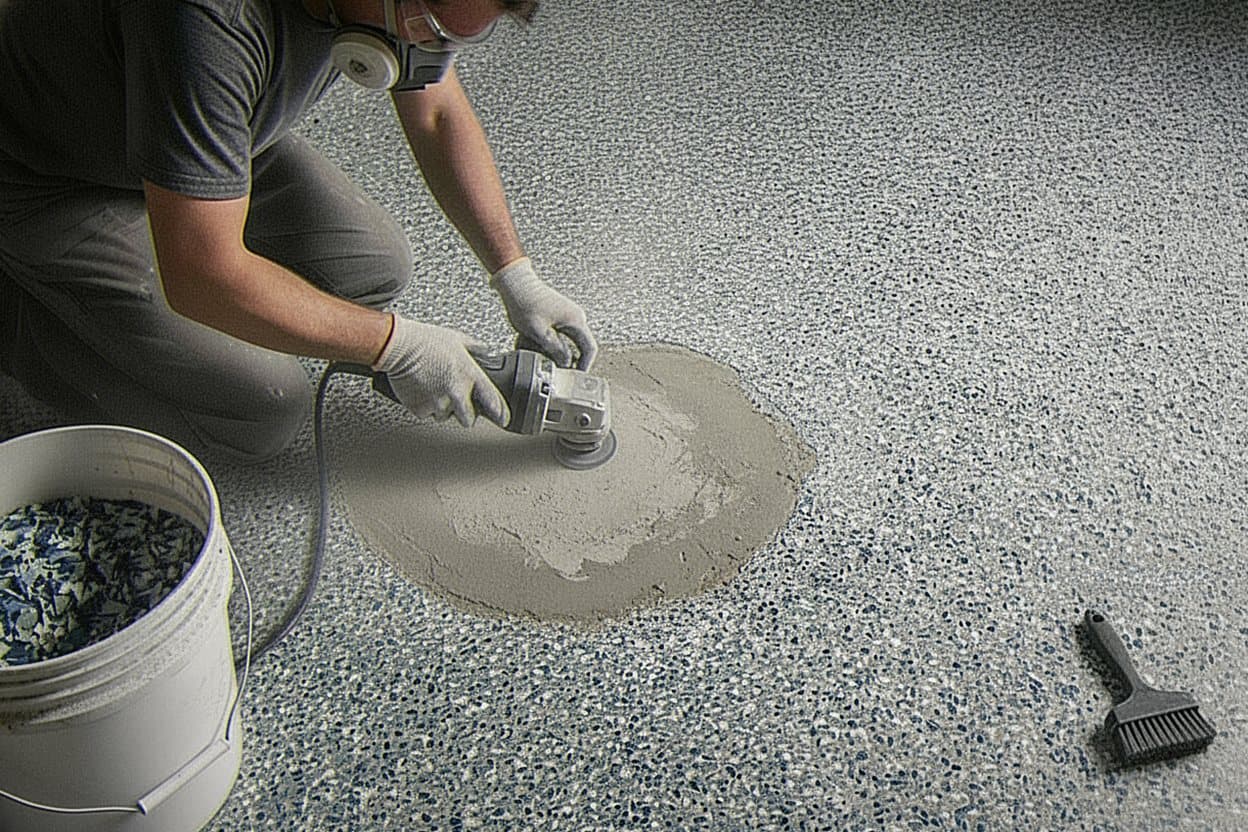
On the first visit, we run a test grind on a small patch, and that one cut tells us how deep the old coating goes, how sound the concrete is under it, whether moisture is in play, and where the cracks run. From there we know the right move. Some floors need a full grind and recoat, while others need a patch in one zone and a blended topcoat, and a few are too far gone, which we will tell you straight. You get a clear answer on the spot. The quote follows the reading, not a hunch from the curb. We talk you through what we found, and why.
- A test grind on the first visit. The quote follows what the concrete shows, not a rough guess from the curb. You know the real scope before you sign.
- We chase and fill cracks across the slab. The new coating then sits on sound concrete, not over a moving gap that telegraphs back through.
- Mortar patching for spots where the failed coating pulled concrete up with it. We get the surface flat and sound again before any new coating goes down.
- The recoat uses the same grind, prime, and topcoat steps as a fresh floor. A repair is not a shortcut for us, and it should not be for anyone.
- On a partial fix, we match flake color and finish to the rest of the floor. The patch blends into the old work instead of standing out as a fresh square.
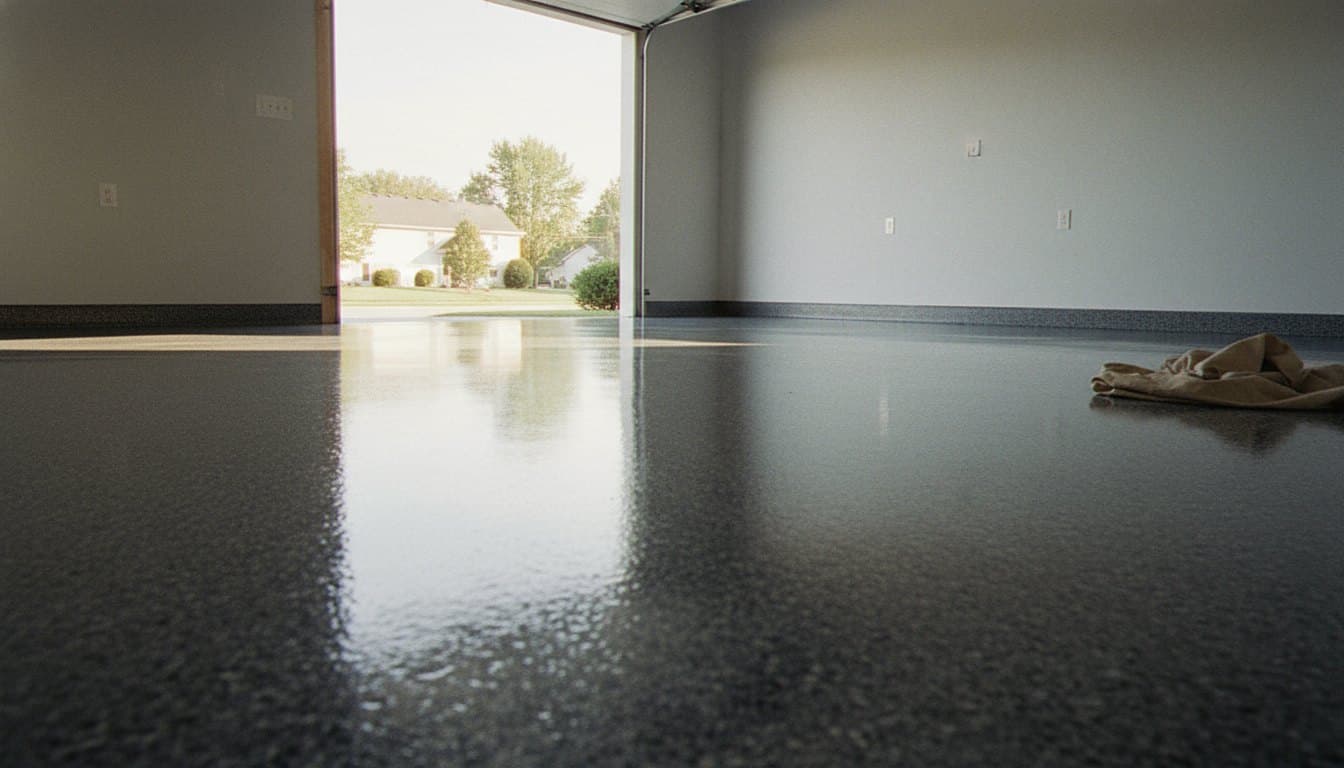
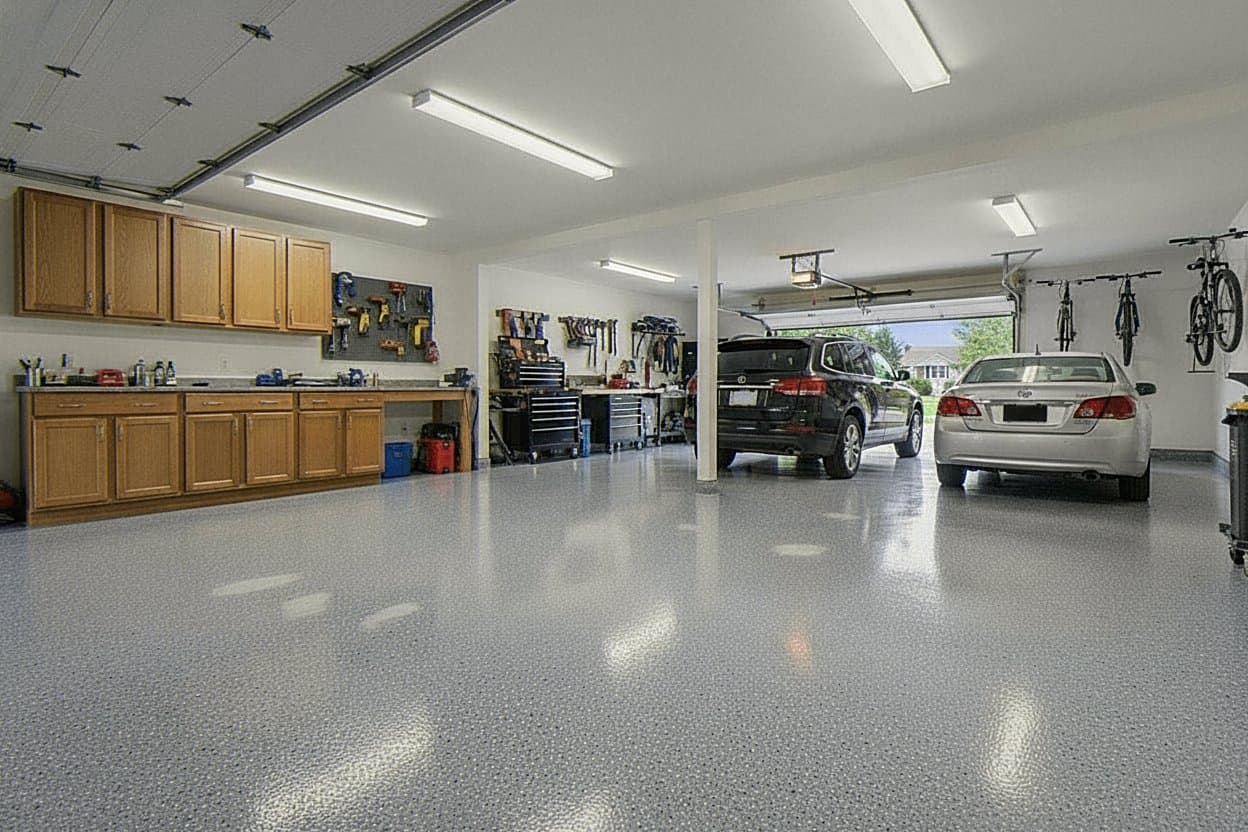
Most repair and recoat jobs wrap up in a single day. We grind the old coating down to bare concrete, open and fill the cracks so they stop spreading, patch the low spots where the slab took damage, then lay the new coating in even coats. For Huntsville garages we lean on a polyaspartic topcoat, because it cures fast even on a warm afternoon and shrugs off hot tires far better than a plain epoxy. The color stays put under the sun coming through the door. You park on it the next day. The floor reads clean, holds its finish, and wipes down with a damp mop. No flaking, no chalky dust, no patchwork look.
If your garage floor is peeling or flaking, call us, and we will look at the slab, run a test grind, and tell you what it truly needs. Sometimes a recoat is the answer. Sometimes a patch in one zone is enough. Either way you get straight talk, fast scheduling, and a floor built to hold up here.