Garage Floor Epoxy · Huntsville

Garage Floor Epoxy in Huntsville, AL

We grind the slab open, pour four coats, and seal it under polyaspartic so your Huntsville garage takes summer heat and oil without lifting.

1 day installs · typical timeline
Free Quote

Free Garage Floor Epoxy quote.

We reply within 1 business hour. No spam, ever.

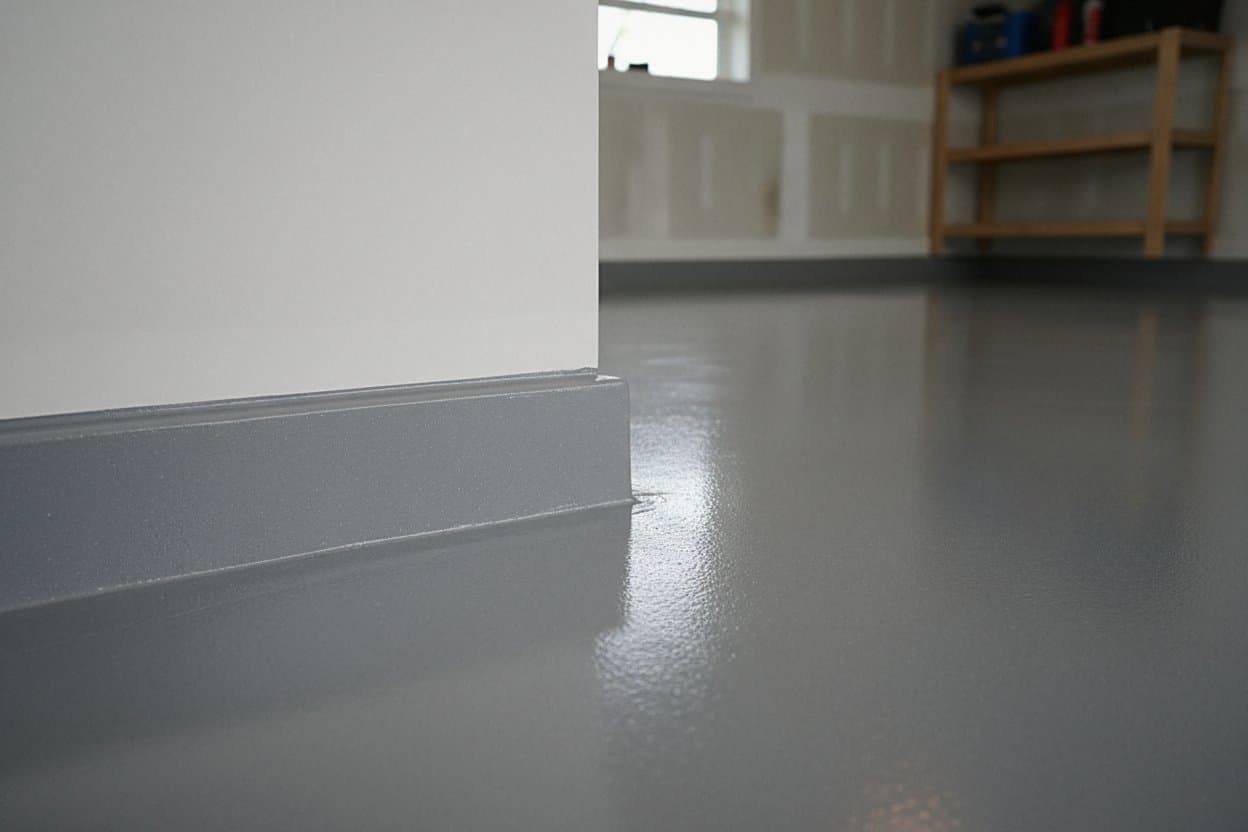
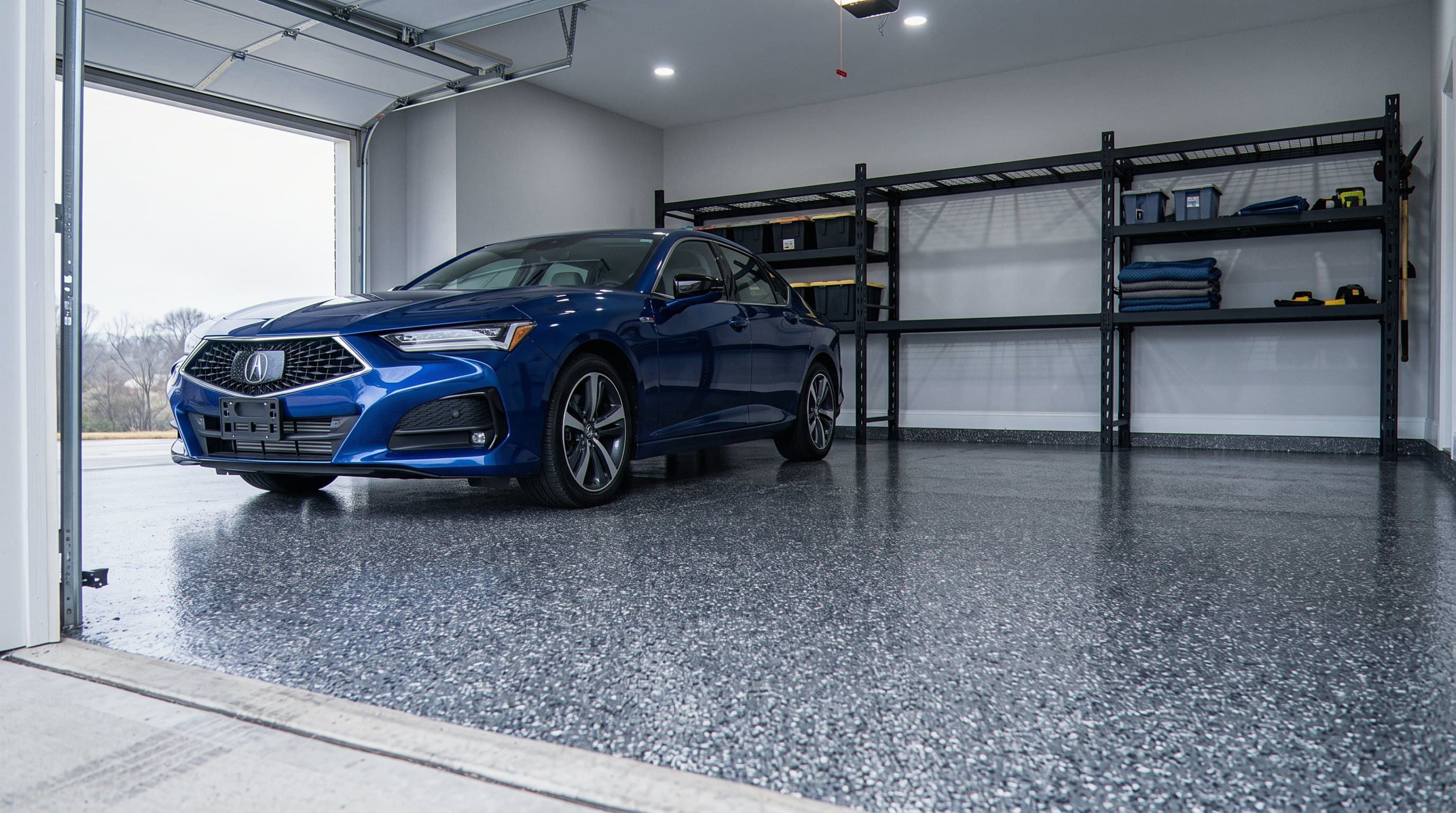
Huntsville garage floor finished in grey flake epoxy
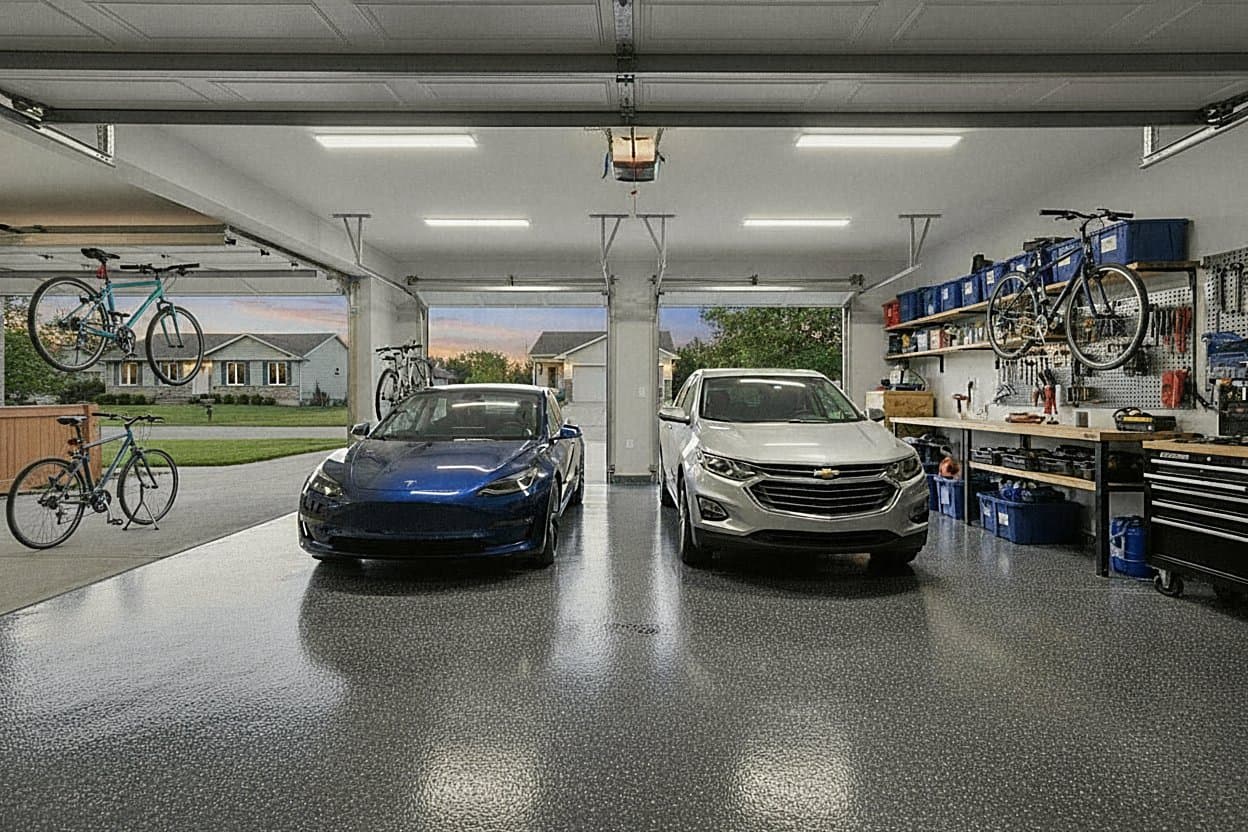
Two-car garage with flake epoxy floor in Huntsville
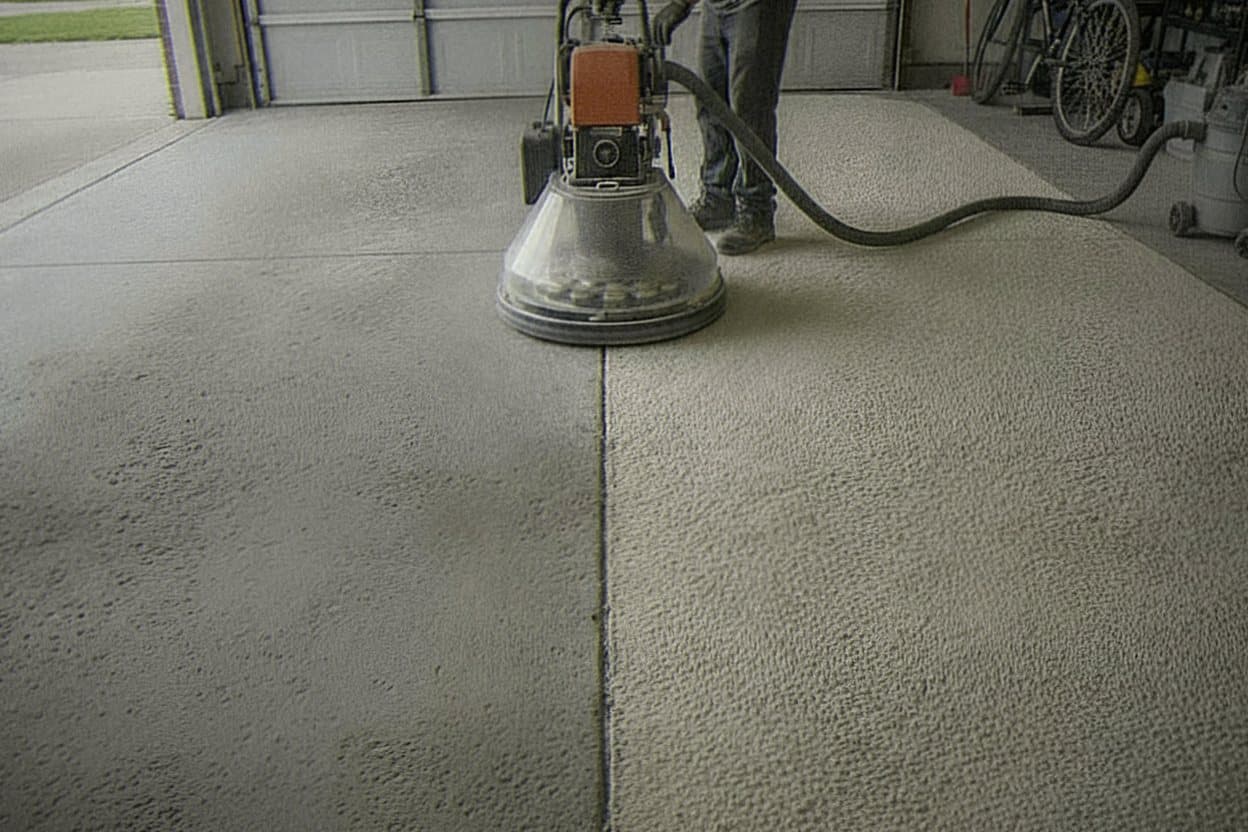
Diamond grinder opening a slab profile in a garage
What we install

What goes into a garage floor that lasts in Huntsville heat

Most garages in Huntsville share one weak spot. The slab was poured for the house, then left bare for years. By the time you park on it, the surface has soaked up oil, road film, and red clay dust. We start by reading what the concrete is actually doing. Then we grind it open with a planetary machine so the resin bonds to clean stone, not to the worn skin on top.

Heat is the real test here. A garage in Madison County can sit in the nineties for weeks, and the slab holds that warmth long after dark. Hot tires pull at any coating that was rolled on thin or skipped the grind. That is why we build the floor in four coats and finish it under polyaspartic. The resin cures hard, the topcoat shrugs off hot rubber, and the floor stays put through August.

  • A garage that holds two cars wraps in one working day. Walk on it that evening.
  • Cars roll back onto the slab about a day after the topcoat goes down.
  • Flake texture adds grip when the floor turns slick from summer humidity.
  • Stands up to oil, gas, brake fluid, and the lawn mower spill in the corner.
  • All of the work happens indoors, so afternoon storms never push the schedule.
The slab is rarely the problem. The coating spec was.

We pour these floors across Huntsville and the towns around it, from Hampton Cove to Madison and out toward Athens. The slab is rarely the reason a floor fails. The spec is. A thin coat over a slick slab looks fine in the showroom and peels by the next summer. So we treat the prep as the job, and the color as the reward at the end.

When you are ready, we will measure the garage, read the slab, and walk you through the color and flake options in plain terms. Call us and we will get you on the schedule.
Materials

Why each of the four coats earns its place

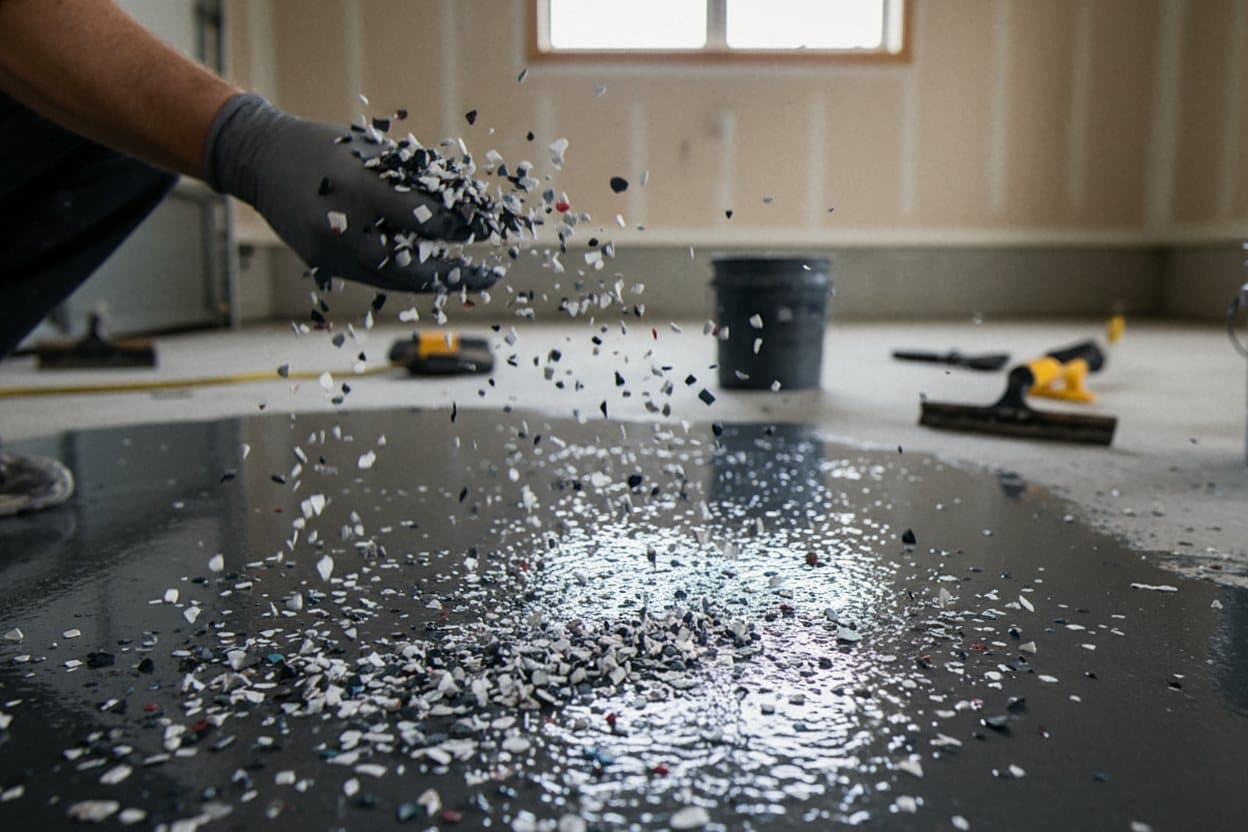
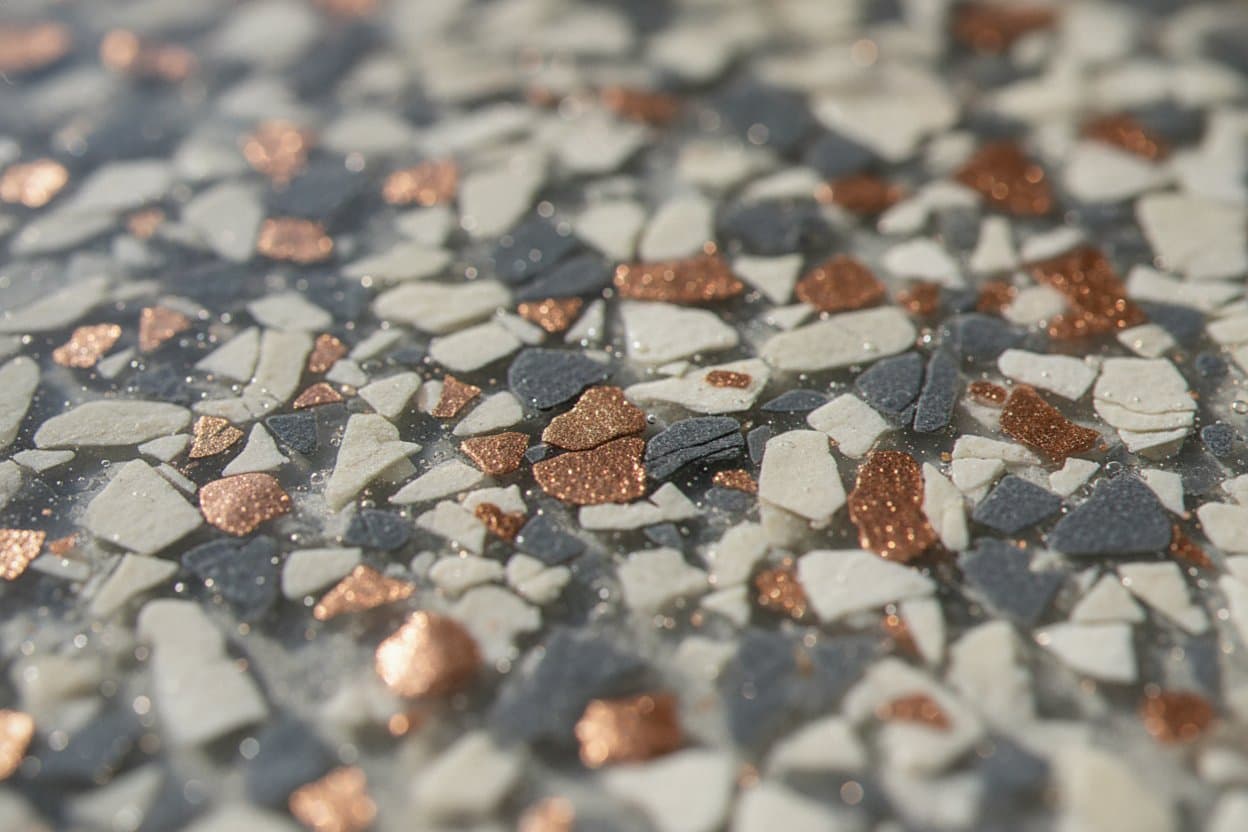
A garage floor that lasts is a stack of layers, and each one has a job. The grind opens a profile in the concrete so the first coat can grab hold. The prime coat soaks into that profile and locks to the stone. The base coat builds the body of the floor and carries the color. The flake broadcast drops in while the resin is still wet. The polyaspartic topcoat goes on last and takes every hit the garage throws at it.

We do not thin the system to save a coat. In our climate the moisture in the slab and the summer heat both work against a shortcut. Skipping the grind or rolling the resin too thin is how a floor in the South lifts at the tire path within a year. Four honest coats over a profiled slab is the difference between a floor you forget about and one you redo.

  • We grind to a clean profile so the prime coat bonds to bare stone.
  • Flake locks into the wet resin by gravity, not by glue.
  • Polyaspartic topcoat takes the heat, hot rubber, and gas spills.
  • Four coats over a profiled slab: prime, base, broadcast, topcoat.
Epoxy base coat rolling over a ground garage slab
Vinyl flake chips set in cured garage epoxy
What about the alternatives?

Other ways people try to refresh a garage slab

Plenty of products promise a fresh garage floor. Here is how the common ones hold up against Huntsville heat and humidity before you spend on any of them.

Latex porch paint

Goes on cheap and rolls fast. It sits on top of the slab instead of bonding into it, so hot tires lift it in strips by the second summer.

Skip

Interlocking PVC tiles

Snap together over the slab with no grinding. They hide a stained floor, but oil and water seep through the seams and sit on the concrete underneath.

Acceptable

Penetrating concrete sealer

Soaks in and helps the slab shed water and dust. It does nothing for looks or grip, so it is a holdover, not a finished floor.

Acceptable

Store kit epoxy in a box

The kit from the home center skips the grind and runs thin. It looks right for a season, then peels where the tires turn.

Skip

Full epoxy and polyaspartic install

Ground slab, primed, based, flaked, and sealed. It costs more time up front and then holds for years through heat, oil, and daily parking.

Recommended
How it goes

From quote to walk-on, fast.

01

Your inquiry

Call or send the short form with what is going on at your place. A sentence or two is plenty for the first step.

02

We talk it through

We go over the situation on the phone, ask the questions that matter, and tell you what we would do next.

03

A clear plan

You get a plain-language rundown of the work, the order it happens in, and what to expect on the day.

04

The work gets done

Our crew shows up when we said, does the job, and walks you through the result before leaving.

Before you book

Questions worth asking the installer before signing

A garage floor is only as good as the prep you cannot see once the resin is down. These are the questions that separate a real install from a quick roll and run.

What method are you using to open the slab?
We grind every floor with a planetary diamond machine that cuts a clean profile into the concrete. Some crews acid wash instead because it is faster and cheaper. Acid does not open the slab evenly, and the coating that goes over it has nothing to grip. If the answer is a wash and not a grind, the floor is already on a clock.
How are you treating the existing cracks?
We chase out each crack, fill it with a rigid patch, and grind it flush before the prime coat. A crack that is painted over telegraphs straight back through the new floor within a season. Filling it right means the repair moves with the slab instead of splitting open again.
Will it actually take hot tire contact?
This is the question that matters most in our heat. Cheap coatings soften under a hot tire and peel where the rubber sits. A polyaspartic topcoat over a real epoxy base cures hard enough that the tire releases clean every time. Ask what the topcoat is, not just the base.
What does the color and flake selection look like?
We bring physical flake blends so you can see the chips in daylight before you pick. Color hides the oil and tire marks a garage collects far better than a bare gray slab. You choose the blend, we match the base coat, and the floor reads the way you expected.
When can the cars come back?
You can walk the floor the same evening we finish. Cars come back about a day later once the polyaspartic has fully set. We give you the exact window for your floor before we start so you can plan where to park.
Aftercare

Living with the floor over the next decade

A finished garage floor asks for almost nothing, which is the point. The polyaspartic topcoat is sealed tight, so spills wipe up instead of soaking in. A little routine care keeps the gloss and the grip for years, even with daily parking and the heat we get from May through September.

  • Sweep or dust mop weekly so grit does not grind into the gloss.
  • Rinse with a damp mop and a drop of mild soap when it looks dull.
  • Wipe oil or fuel as soon as you see it, even though it will not stain.
  • Skip harsh solvents and metal blades that can score the topcoat.
  • Put a mat under a welder or floor jack to take the point load.
Epoxy floor edge where slab meets garage wall
FAQ

What Huntsville homeowners ask about garage epoxy

What separates epoxy from polyaspartic, in practice?
Both go down as a liquid and harden into a solid floor. Epoxy builds a thick, stiff base coat. Polyaspartic is different. It cures fast, shrugs off the strong summer sun, and holds its color over the years instead of yellowing the way a cheaper top coat will. On most jobs we pair the two, using epoxy for the build and polyaspartic as the top coat.
How are coating jobs typically priced in this market?
A few things move the number. Floor size is the big one. Then comes the shape your slab is in, because cracks, old coatings, and oil stains all add prep time before a single drop of resin goes down. The system you pick matters too, since flake and metallic finishes cost more than a plain epoxy flooring coat. We walk the space first. Then we talk price.
Are winter installs realistic in north Alabama?
Yes. Huntsville winters stay mild, so we install epoxy flooring year round, planning each pour around the forecast so the slab cures through a stretch of dry, settled days. On the cooler days we lean on polyaspartic, which sets even when the air is chilly. A closed garage holds heat well enough for a clean cure. It works.
Will the floor pick up or stain under hot tires?
Not when the floor is done right. Hot tire pickup happens when a coating never fully cured and the warm rubber of a parked car slowly pulls the soft layer loose from the slab below. We let each layer cure on its own time before you park on it. The result lasts. A finished epoxy floor stays put and wipes clean of road grime and oil.
Ready when you are

Let's make your next steps easier

Tell us what is going on at your Huntsville home and we will walk you through the options. One call or one short form is all it takes.

Call (256) 988-7462Make your inquiry
CallContact us